Devarim ›Shoftim (Deuteronomy 15:18 21:9)
Royal Pain
August 20, 2004 · Rabbi Yerachmiel Seplowitz
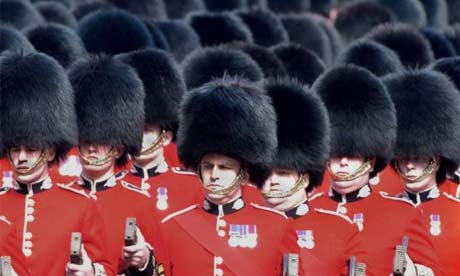
Several years ago, I had the opportunity to spend some time in London. I went to see a parade that celebrated the annual opening of Parliament. It was really awe-inspiring. I was struck by all the pomp and ceremony. The soldiers in traditional British military fur hats, the Yeomen of the Guard, the horse-drawn carriages; it was breath taking.
And then SHE arrived. Her Majesty, Queen Elizabeth rode by in her carriage, crown and all. I recited the traditional blessing – “Blessed are You, Who has given of His glory to human beings.”
-———————————————————————
Moses told the Nation of Israel that upon entering the Land of Israel, they would be called upon to choose a king.
Royalty is a pretty heady experience. The Torah takes “his majesty” quite literally. Being king of Israel carries a great deal of power and prestige. A king of Israel was an absolute ruler. Those who disobeyed him or demonstrated any disrespect did so at the risk of execution. Those who appeared before him were required to bow down. No one was permitted to ride on the king’s horse or sit in his seat. Even after his death, his personal belongings could not be used by another person; they had to be burnt.
The king also had to dress and act the part. He was groomed daily by a barber. He was required to wear royal clothing and a crown. He was not supposed to stand up for any person (except the High Priest) or even speak softly in a conversation with one of his subjects.
-———————————————————————
Why did the king act this way? What happened to the humility that every person is supposed to maintain? I think Samuel the Prophet answered this question when he reprimanded King Saul for not being sufficiently assertive: (It is interesting to note that Samuel did not take the liberty of criticizing Saul until the king gave him permission to do so.)
“Although you may be small in you own eyes, are you not the leader of the Trib**es of Israel*, whom G-d has anointed king over* Israel?” (1 Samuel, 15:17)
The King of Israel was more than a political leader; he was a spiritual leader as well. He represented Israel. He represented the Torah of Israel and the G-d of Israel. As such, there was no room for casual informality. The king was the king, and his subjects were required to revere him. It was part of the king’s job to make sure that they saw him in that light.
-———————————————————————
In view of these requirements, it is easy to see why so many kings became so corrupt. When a person is given absolute power, it can go to his head. If people accept everything he does without question, he will take liberties that he has no business taking. Therefore, the Torah provides some preventative medicine:
And it will be when he sits on the throne of his kingdom, he shall write for himself two copies of this Torah on a scroll… It will be with him, and he will read from it all the days of his life, so that he will learn to fear his G-d, to ob**serve all the words of this Torah…so that his heart does not become haughty over his brothers, and not turn from the commandment right or left, so that he will prolong years over his kingdom… (Deuteronomy, 17:18-20)
Maimonides explains (Hil. Melochim, 3:1):
“… The second (Torah scroll) never left his presence, except in the bathroom, a bathhouse, or any place that is not appropriate for reading the Torah. When he went to war, it was with him. When he entered, it was with him. When he sat in judgment, it was with him. When he reclined (to eat) it was next to him, as it is written, ‘It will be with him, and he will read from it all the days of his life.’”
Because it was so easy for the king to get caught up in his own honor, the Torah set up this safeguard of always having that Torah scroll accessible “ …so that his heart does not become haughty…”
Maimonides (Ibid, 2:6) explains:
“While the Torah has given him great honor, and everyone is obligated to honor him, so too the Torah commands him that his heart be humble and ‘wounded’, as it says,’ … and my heart is wounded within me.’ (Psalms, 109:22) He shouldn’t act overly arrogant among Israel, as it says, ‘…so that his heart does not become haughty…’ He should act graciously and mercifully with the great and the small. He should go out and come in with their desires and welfare in mind; he should be concerned with the honor of the smallest of the small; when he addresses the entire congregation as a group, he should speak in gentle terms, as it says, “listen to me, my brethren and my People…” (1 Chronicles, 28:2) and it says, ‘if you will today be a servant to this nation…’ (1 Kings, 12:7) He should always act with extreme humility. We had no one greater than our teacher Moses, and he said, ‘What are we..?’ He should bear their troubles and their burdens, their complaints and their anger ‘…as a nurse carries an infant.’ (Numbers, 11:12) Scripture calls him a shepherd, ‘… to be a shepherd over Jacob*, His nation*…’ (Psalms, 78:71)…”
-———————————————————————
Our country recently mourned the passing of a great president, Ronald Reagan. He was a good friend of Israel, and, in the opinion of many, the man who defeated the Soviet Union and won the Cold War. Our grateful nation spent millions to honor this great man. The expense, in my humble opinion, was justified. He was our leader.
However, I was surprised to learn that there is a special office in charge of helping presidents plan their funerals. Apparently, every step of that funeral, from the President’s riding boots in the stirrups of the riderless horse, to the lowering of the casket into the ground as the sun dipped into the Pacific, was meticulously planned by Nancy and the President. I heard that most of the living presidents have their own funerals on file and ready to go.
I have often said that we spend our lives writing our own eulogies, but I didn’t mean it literally! (Many of our greatest Sages have actually left instructions that there were to be NO eulogies at their funerals. What a contrast!)
I’m sorry, Mr. President. I respected you in your lifetime, and continue to respect you today. All those honors you received were well-deserved. But you should not have been the person to plan them.
-———————————————————————
The Torah requires us to give honor to the Sages of Israel. We are required to rise when a scholar enters the room. (The rationale is that if we rise when the Ark is opened, and a “dead” Torah scroll is carried into the room, we should certainly stand when a LIVING Torah scroll enters the room.) Let me share with you the stories I read about two great Torah Sages.
Rabbi Yitzchok Elchanan Spector was selected as the new rabbi of the city of Kovno, in Lithuania. On the evening when the rabbi’s carriage arrived in town, he found the streets lit up with torches. The entire Jewish population of the town showed up to honor this great Torah scholar. Some of the townspeople removed the horses from the wagon, and proceeded to pull it themselves. When the people looked into the wagon, they found Rabbi Spector crying. He understood that his position as Rabbi required that he accept this honor, but it pained him that he was forced to do so.
Rabbi Chaim of Sanz was one of the great Chassidic leaders. His followers treated him like royalty. As is the case with many Chassidic Rebbes, he dressed opulently. Among other things, he wore gold shoes. (I imagine they were probably leather shoes, overlaid with gold leaf.)
One winter day, his followers noticed blood stains in the Rebbe’s footprints in the snow. When they investigated, they discovered that the Rebbe’s shoes had no bottoms! When they confronted him, he explained, “As a Torah leader, I am required to bear the honors that are thrust upon me. But I didn’t want to let the honors go to my head. Therefore, for the masses, I wear the fancy “Rebbe” clothes that you want me to wear. The world sees my gold shoes. But for myself, I have to constantly be reminded how small I truly am…”
-———————————————————————
In November, you and I will be called upon to select a President of the United States. Each of the two candidates is convinced that he is the only hope we have. Each is convinced that the other one is the worst man for the job.
Naturally, I hope and pray that whichever of these two fellows is best for the job will be elected. But think of the leaders of Israel and the Presidents of the United States. Might we not be better off with a leader who was humble enough to feel that he really doesn’t deserve the job?
Have a great Shabbos.
Rabbi Yerachmiel Seplowitz
© 2004 Rabbi Yerachmiel Seplowitz. You may reprint this message for non-commercial use with attribution to torahtalk.org.